

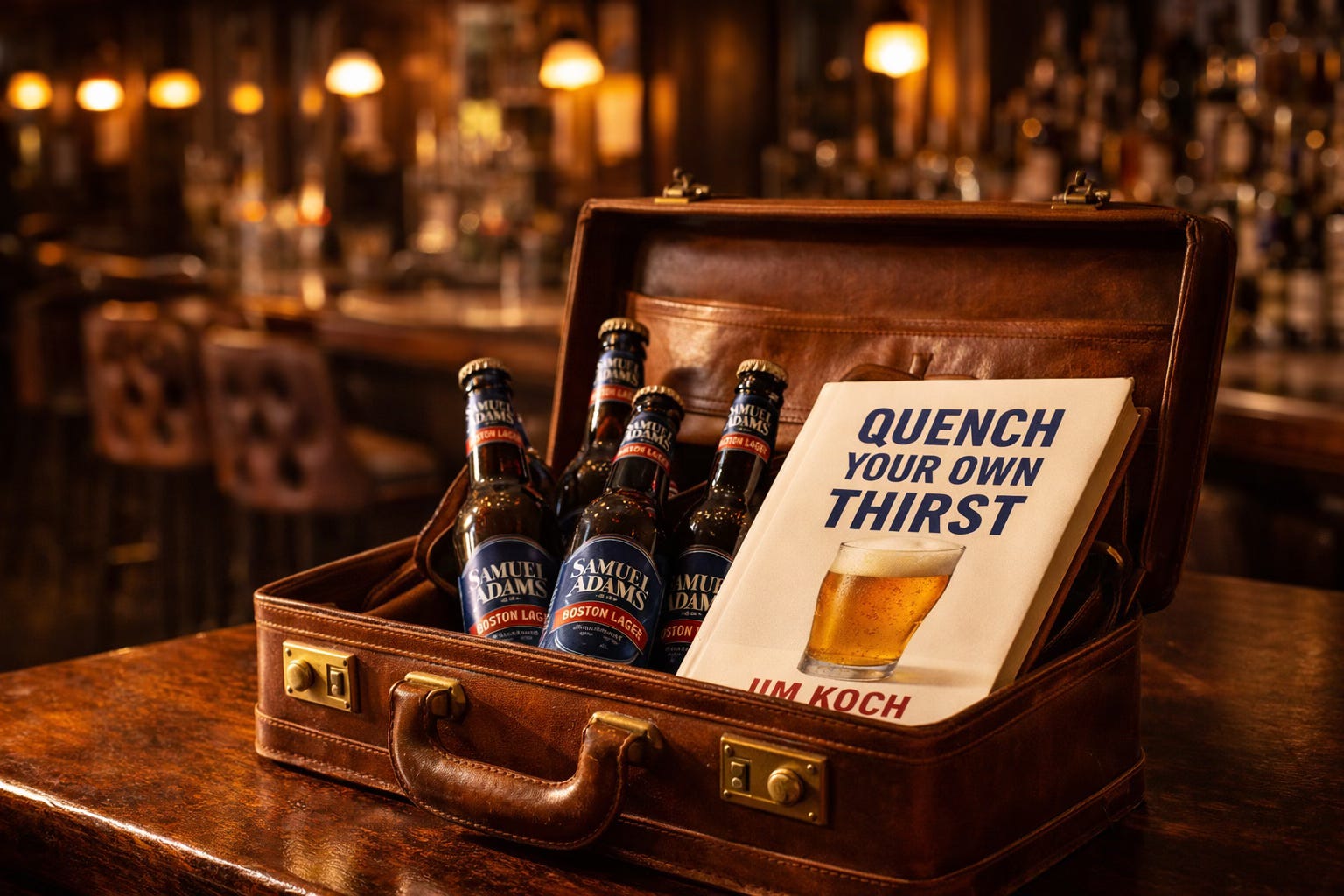
Quench Your Own Thirst is a business book, not an investment book—but it contains valuable lessons for investors.
As Buffett often says, “I am a better investor because I am a businessman, and a better businessman because I am an investor.”
Here are the investing lessons I pulled from the book.
Durable Edge Comes from Quality, Not Price
A business can make its product better or cheaper. But if you choose cheaper, you’re turning your product into a commodity. Koch consistently aimed to offer better quality over a lower price.
This is a simple lesson for investors: avoid commodity products. It’s extremely hard to build a durable competitive position when competing solely on price. We want to prioritize quality, brand, and experience over price warfare.
Hermès over Tapestry (TPR).
The exception is if there’s a structural component that makes the business the lowest-cost producer. But even then, the business is more of a price taker than a price maker.
Small Niches Can Create Huge Shareholder Value
This book was first published in 2016, just over 30 years after the founding of The Boston Beer Co. After ~30 years, Samuel Adams held “only about 1 percent of the overall U.S. beer market”—but its revenues reached nearly $1B and the stock rose 1,160% from 2005–2014.
TAM (total addressable market) has become a big focus lately, especially for tech companies. But it isn’t everything. A tiny but profitable, defensible niche can still compound massively.
Recent market action aside, Vertical Market Software companies immediately come to mind. They often serve very small, well-defined niches—but the critical nature of their service gives them pricing power and consistent cash flow to either reinvest in high-returning opportunities or return excess cash to shareholders.
Unit Economics Matter More Than Stories
Koch is explicit: if your gross margin dollars don’t exceed fixed costs on an ongoing basis, “you don’t have a business.”
This lesson applies to evaluating companies that aren’t yet profitable or are slightly profitable and investing heavily for growth. Like the lesson above, we can get fixated on potential TAM and future growth without understanding the key unit economics. Is there operating leverage? Will all this growth investment produce real profits and returns for investors—or is it growth for growth’s sake, which can destroy shareholder value?
Compounding Rewards Patient Capital
Jim’s early investors—his friends and family—who cut checks for $1,000 thirty years ago now own shares worth about $4 million (at the time of the book’s first publication).
It’s a common lesson on this site: the big money is made by finding the right businesses and holding them for long periods.
Risk Should Be Asymmetric
One line from the book stood out to me: “Take some risks; blow it all up if you have to… most risks aren’t really risky.”
It’s a poignant line for anyone thinking about starting their own business or making a career change. Change is big and scary and often looks very risky. But if you step back and rationally assess the risks, they’re often not that risky. Like leaving a great-paying job and career track to start a business—at first it looks risky to give up current stability and future prospects for something that might fail. But what would happen if that business failed? Could you find another job similar to the one you had before?
It’s a common phrase I hear on the podcast How I Built This when entrepreneurs reflect on starting their businesses: “The worst thing that could happen is I get another job.”
It’s an asymmetric risk.
The potential upside—financially and mentally—of running your own business and being your own boss far outweighs the potential downside.
That’s exactly what we want as investors: asymmetric risks where the downside is survivable and the upside is far greater. We want to avoid bets that jeopardize our financial health for minimal gain. The now-classic example is subprime CDS, where the potential loss was capped but the upside was far greater—like 100-to-1.
We can’t all find the next big short or get access to CDS-like trades. Most of us are dealing with publicly traded stocks. Before we buy a position, do we fully understand the downside? Are we buying the stock with enough margin of safety that our potential loss is far less than the potential upside of a high-quality business? Is there an asset on the balance sheet—like cash—that helps define the floor for our investment?
You Don’t Need to “Own the Market”
Jim warns that many companies “mess themselves up believing they have to ‘own the market’ before competition does”—that they need to be the biggest company to be the best.
Boston Beer thrived with discipline and focus, not dominance. They didn’t focus on being the biggest; they focused on being the best.
This reminds me of empire building—companies and management teams focused on building the biggest company, not the best-run company for shareholders. We want to find companies with a disciplined focus on their core competencies that run the company to maximize returns on invested capital and free cash flow—because that’s what’s best for shareholders, not management’s ego.
Culture and Ethics Are Real Economic Assets
In 2008, during a quality control test called “candling the bottle,” Boston Beer’s Cincinnati brewery discovered “inclusions”—tiny pieces of glass. They tested thousands of bottles at multiple breweries and discovered that the inclusions were coming from one bottle supplier.
The glass inclusions were actually too small to be harmful to consumers, and former FDA employees in charge of food recalls said that Boston Beer didn’t need to do a full recall. But Jim decided on a full recall, which would wipe out that year’s profits, potentially tank future sales, and possibly end the business. But Jim wanted to do the right thing, the hard thing—and if the business tanked, “so be it. It had been a good ride.”
It was about trust. Jim knew that the glass inclusions would eventually get out, and he didn’t want to be another big corporation trying to cover up their mistakes. It would violate consumer trust since everything about Boston Beer was “better ingredients, better beer.” Drinking glass—no matter how small and not harmful—is not better ingredients or better beer.
We’re investing in companies, but we’re also investing in the people who lead them. Who do we want to invest alongside—CEOs who put short-term profits first, or CEOs who prioritize long-term trust, customer loyalty, and brand goodwill? CEOs who think and manage the company for long-term success?
Execution and Grit Are Key
Koch literally went door-to-door with a briefcase full of beer, selling Samuel Adams to bartenders and bar owners. One, he couldn’t afford a dedicated salesperson in the early days—but also, who would’ve known the story behind his beer, its value proposition, and how best to sell it to customers better than Jim? Jim Koch did everything he could, including the slow grind of going bar to bar, to get his company started.
Again, we’re investing alongside leadership. We need to pay attention to what they do versus what they say. Are they willing to do the hard things? Are they passionate about their product or service? Because that passion feeds the competitive drive to continually improve their product.
Find One Thing to Be World-Class At
“When starting a business, there is probably one thing in a hundred where you need to be the best in the world. The other ninety-nine things, you can be pretty good at.”
The lesson is again about quality. Jim Koch and Boston Beer weren’t trying to be the biggest beer brand. They didn’t want to be the next Anheuser-Busch. Jim wanted to be the best brewer, and dedication to that craft is what drove the business.
For long-term investors, we want to own world-class businesses because they tend to have enduring competitive advantages that lead to compounding long-term shareholder value. But we also need management teams that recognize what the company is world-class at and are relentless at maintaining that.
Businesses Are People
The main lesson for investors: you’re not just investing in a business model—you’re backing people. And Quench Your Own Thirst gives us a template for finding the right people with the right founder mindset and economic discipline that tend to produce outstanding long-term returns.
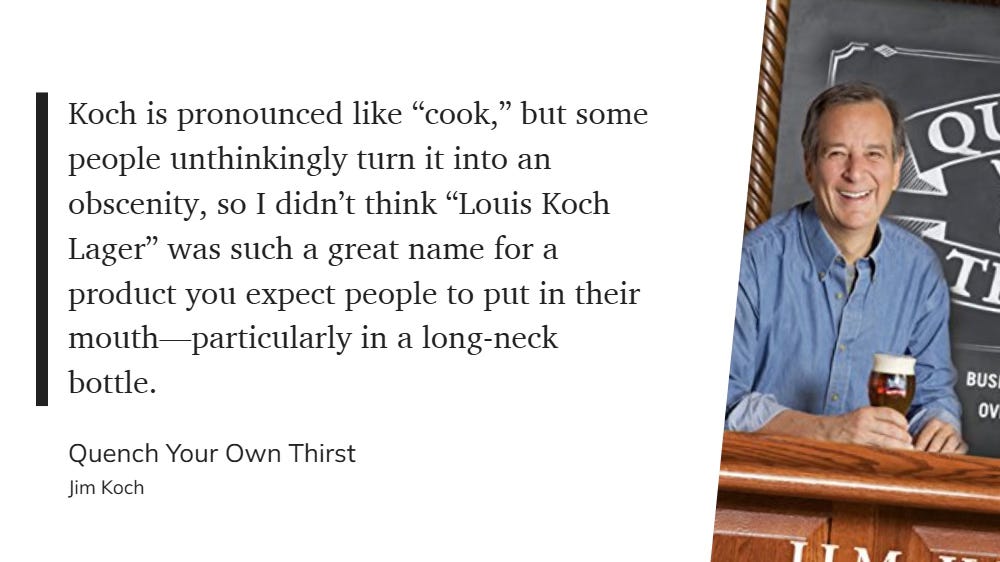
And as a bonus, the funniest line from the book when coming up with a name for his beer:
Love this breakdown. The “business book” angle is exactly right. Also, “own the market” is usually management’s ego talking. Shareholders get paid when you’re the best at one thing and you stay disciplined.