

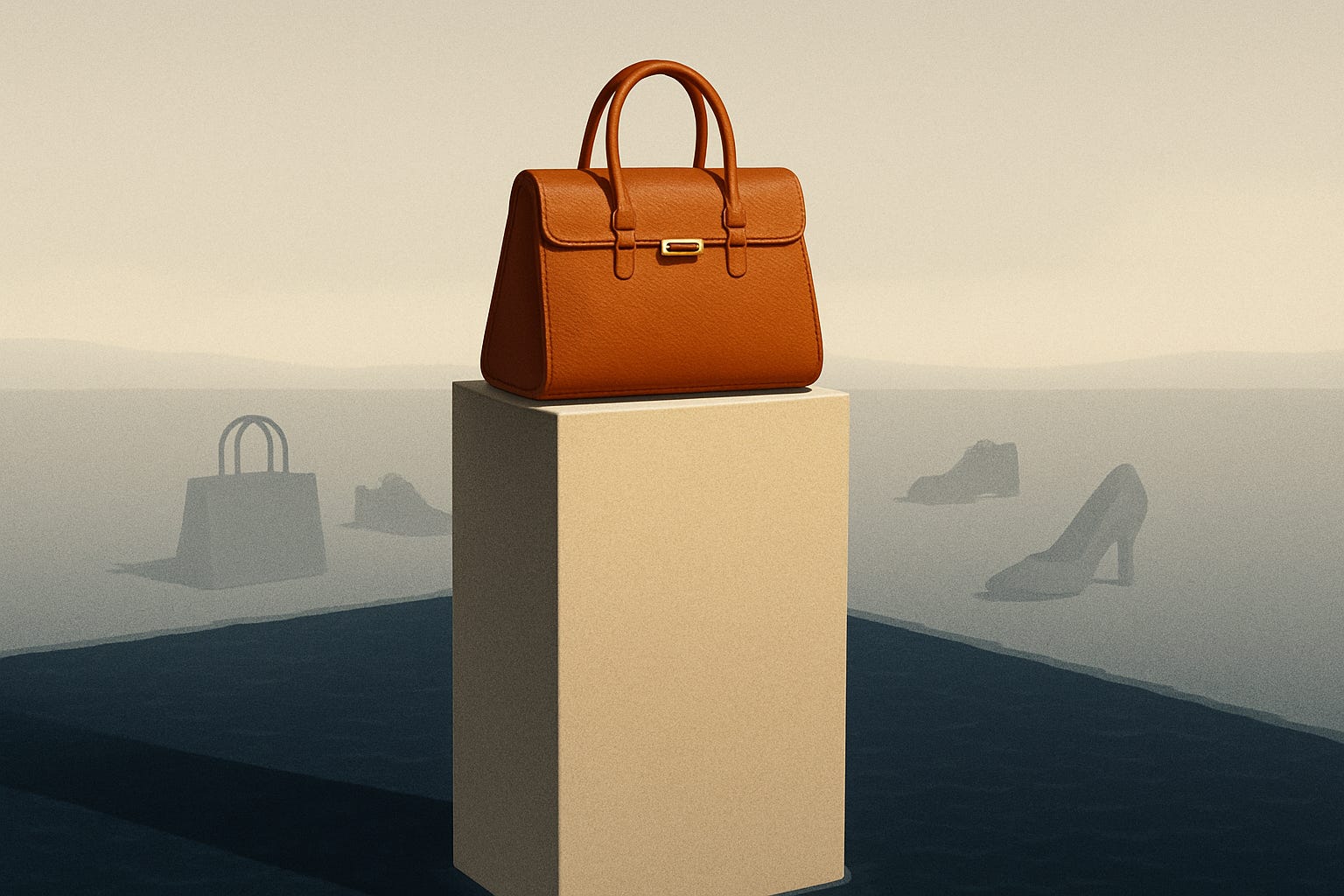
Why do Luxury goods providers have a moat around their business?
How do Luxury goods providers maintain their market position and their social position with consumers?
They’re just selling a product, albeit a high-quality and expensive product. In theory, a start-up luxury goods company could create a better product, ramp up its marketing, and knock off the incumbent.
But it doesn’t happen.
Jean-Jacques Guinoy, the CEO of LVMH’s Wine & Spirits division, in a podcast interview with Nicolai Tangen, said LVMH has developed new brands over the years, but these brands remain small. There’s a barrier to entry that existing luxury brands create.
Social Signals
According to Jean-Jacques, luxury brands are a dialogue between you and the product. How it makes you feel about yourself.
But they also create a dialogue between you and the world.
You’re signaling how you want others to perceive you: your wealth, taste, or values.
Established luxury brands are more recognizable than newer names, making your signal clearer. This is especially true among people who own and appreciate the same brands. To them, it’s a powerful signal that you belong.
Brand Durability & History
Existing luxury brands also have a connection to the past.
They have durability.
If you’re buying a high-end luxury item to signal to others, then you want that signal to be timeless.
A luxury brand that has been around for 30, 50, or 100 years is likely to be around for the next 30-100 years, and the social signal will be the same. You don’t know if the newer, trendier luxury brand will have the same staying power.
LVMH goes to great lengths to tie itself to historical moments and historical people. You’re drinking the same champagne as Winston Churchill. You’re wearing Berluti shoes just like Great Garbo did. You can’t associate yourself with these people and events when you buy the newer, trendier brand.
High-end luxury products inherently lack a built-in barrier to entry. It’s just a product. But companies like LVMH have built a cultural and psychological barrier to entry that is hard to overcome.
Great insights here on "social signals," but I’d go a step further and call this what it really is: a "Vanity Tax" on the insecure. LVMH has commodified the need for validation, creating a uniform for the "haves" to distinguish themselves from the rest of us. That historical connection you mentioned is a defensive wall of sorts - it ensures that new money has to pay a premium to look like old money.
As much as the system determines the rules, there’s a clear move for us here: don’t be the consumer, be the owner. Instead of handing over our hard-earned labor for a depreciating status symbol, we should be buying the stock and letting the status-seekers fund our financial independence. It’s a rare chance to legally tax the rich ourselves and use their desperate need for exclusivity to build our own safety net.